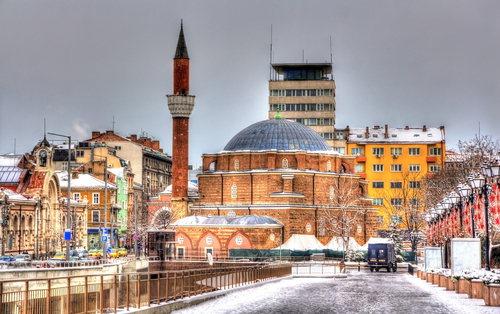
I have not planned to write any article on this issue but coming back from a conference from Sofia, Bulgaria on the subject “Cultural Heritage in Migration” where we had all the intense discussion on this issue with the conference organisers /participants and later my personal experience on heritage in Sofia left me no other than to address this issue. The question “Whose Heritage Is It?” as raised first by Stuart Hall surrounded on the definition of heritage baffled me throughout my stay in Sofia.
For many of us the world “heritage” connects us with the past, therefore the connection with history. But some historians have disputed and criticised mixing up both and distancing themselves like David Rowenthall, says heritage is not history at all: it is not an inquiry into the past, but a celebration of it. For him like many historians there must be a clear separation from both with each other.
Keeping this statement in mind by Rowenthall I would not like to go deep into the discussion of this argument as I’m not a historian. But as a social scientist I would like to raise some questions how does heritage or history affects someone’s identity, especially how the past influences the identity, forms the feeling of belonging and how this transformation of identities formulates with people living away from country of origin, or from their parents/grandparents country of origin. And in this case I will try to raise how one can feel left confronting his/hers heritage and trying the balance with his/hers present identity while visiting another country?
The notion around the questions of belonging and identity in connection with heritage becomes very complicated than thought as heritage is subject to time as it changes with different and new identity and new presents. Therefore present time and heritage cannot be separated from each other.
Bulgaria is a country where nearly half a millennium of Ottoman rule had a great deal of influence on the culture and surroundings until its independence in 1878 and left many mosques, fountains, baths, bridges, caravansaries and markets. The Islamic art and architecture is still to be seen in some historic buildings and monuments.
After visiting Banya Bashi mosque in Sofia, interestingly I found myself historically relating to this building especially discovering that it was built by the world renowned architect Mimar Sinan in 1576. But to my surprise, discovering that the mosque was left with no further refurbishment until recently was indeed very disappointing.
It is worth mentioning that Mimar Sinan mastered the Banya Bashi mosque over the natural thermal spas. The visibility of the steam rising from vents in the ground near the mosque walls makes it indeed an unique architectural art work.
The question around “Whose heritage is it?” must have, I think started capturing me first in Banya Bashi mosque so deeply, I felt suddenly sad, knowing that not much emphasise, actually not at all credit given to the great architect Mimar Sinan who mastered buildings even on natural spas mid-16th Century.
Further of my research I found out the existence about another masterwork by Mimar Sinan which was built in 1528 and called Black Mosque (Kara Camii). This mosque with exceptional architecture was abounded after the independence of Bulgaria from the Ottomans and became a warehouse & prison for a while and converted into a church in 1903 and named Sveti Sedmochislenitsi Church.
With the help of my colleague Liana Galabova in Sofia I was able to get more information on the history of the Black Mosque which enlightenment me more as I had difficulties finding the sources. Some of the historical information surprisingly says that it is believed but not certain, that the mosque is built by Mimar Sinan but not further information is to be found. It is easier to find information about the architects who came up with the idea of converting and redesigning the Black Mosque into a church then the main architect (thought to be) Mimar Sinan. With my limited resources I read in one of the papers sent to me in Bulgarian (thanks to google translation) the well known traveller Evliya Celebi mentions the mosque with reference to Mimar Sinan in his writings. So far my little research suggesting the architect was Mimar Sinan but I think art historians are the experts and only they can dig in deep as it will be actually very interesting to find out which talented architect apart from Mimar Sinan did built a mosque Black Mosque in Bulgaria during the Ottoman Period.
Unfortunately Banya Bashi mosque is now the only existing mosque in Sofia. Many were destroyed by neglect after the independence from the Ottoman rule and especially during the political turmoil in the 1970’s and 1980’s towards the Bulgarian Turks.
Here, I do not wish to tackle the issue on “heritage industry” in regard whose heritage the governments in general protects, or to look into heritage context and see how highly politicised governments interest area in general are not only in Bulgaria, but overall in countries around world.
Heritage is not simply reflects only the past but also shapes present reality and tries to give us sense to understand the world around us, is the main concern of this article.
As the foundation of collective and individual identity lies in the past, buildings symbolises the shared cultural heritage in return which our individual identity responds with its own experience.
Perhaps it is or was my personal attachment to Mimar Sinan’s architecture as I am still visiting Suleymaniye Mosque* each time I’m in Istanbul. The historic building which is in the middle of old Istanbul is an area where I know since my childhood and have strong feelings of belonging. I am acquaintance to this part of the city and have many memories.
Even to my limited time while I’m in Istanbul, I do find myself sitting often in the gardens of the Sulemaniye Mosque and observing the incredible building from outside. I do not go into the mosque as the beauty of the architecture captures me with calm and feel tranquillity where the harmony of the space is the result of the master work by Mimar Sinan. The silence in the garden is like a place of serenity in the busy and noisy Istanbul.
The self-identify of people depends on remembered meanings. Heritage allows people to have some social identification whether on individual or social level. It is the journey from the past to present in which I probably took the journey unconsciously through my memories and got evoked visiting the Banya Bashi and Black Mosque (now Sveti Sedmochislenitsi Church) in Sofia. My memories of the Sulemaniye Mosque from the past gave a sense of belonging and the work by the architect Mimar Sinan became a part of my collective heritage. This has demonstrated that memory is the mirror of the past and it is only visible if it finds a way to come out. Like heritage memories are the grounding of the identity and forms the present its understanding of his/hers environment/surrounding.
But in the same context the buildings of Mimar Sinan in Sofia or Mimar Sinan as an architect even if it is not much acknowledged by the current governments official agencies is part of Bulgaria’s rich heritage. The choice of the heritage industry in Bulgaria what to conserve from the past and what to discard will be decided by them. But from the memories of which to keep and which to forget, or which to demolish and maintain is left to the nation and its people with their shared memories and heritage.
I believe in the question of “Whose heritage is it?” it is important to build bridges between the different areas of experience. By recognising the shared heritage with a direct link to history can built in the 21st Century strong societies with a common understanding for the future.
As memory is our ability to store, retain or recall information from the past experiences it is interesting to observe, how the brain constructs the elements in the question of belonging with special reference to people away from the country of origin or living with his/her parents/grandparents country of origin.
The brain sums up overall what we remember and brings to surface when the need and demand of the memory is desired. Memory is like a diary as Oscar Wilde said and it is been carried everywhere. The pages of the diary open when the need for reading is desired. This is certainly applies to people who were born, brought up or from their parents/grandparents country of origin, in another expression people with multi-cultural heritage.
(*built in 1551-1558)
Copyright Semra Eren Nijhar – All rights reserved
 Semra Eren-Nijhar